// Good morning — Football's back, the Phils are in a pennant race, and Nike just got kicked out of the S&P 100. Two out of three ain't bad.
… And for any new readers, welcome to Signal // Noise — the newsletter read by founders, CEOs, and scrappy builders every Thursday. Each week, what I’m listening to, one deep dive, notes from the field, three links worth your time. No buzz, no bullshit.

| MIXTAPE |
🎧
|
If we’re talking marketing, brand, and a refusal to be anything that you’re not… you’re talking about one band. This one’s largely considered the GOAT by Dead fans.
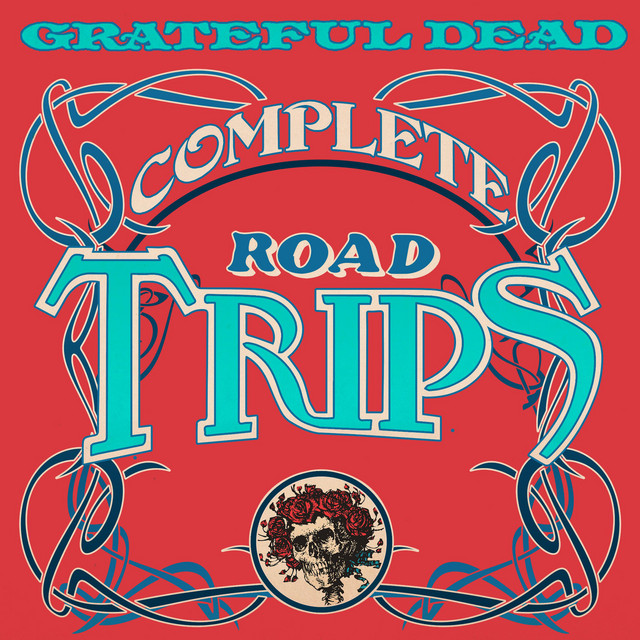
🎧 Want the whole vibe? Find & bookmark the running playlist right here.
| THE SIGNAL |
📡
|
The Swoosh Got Spreadsheeted
Nike is getting kicked out of the S&P 100 on September 21st.
It ends an 18-year run in the index; membership card is officially revoked.
The reason is clear enough, mechanical: since its Covid-era peak, the share price is down about 80% and its market cap is no longer large enough to justify its inclusion.
The swoosh — once a sign of American (and international) innovation and dominance — no longer counts as one of the U.S.'s 100 most important companies.

Since this news came out last week, I thought it'd be interesting to revisit not just how and why Nike messed up so much, but what you can learn from it as a startup founder or CEO.
In my opinion, the lessons are quite timeless.
Inspired by my boy Trung's piece on X last week, I went deep on all the things people have written about John Donahoe, the former Nike CEO who got replaced in October 2024 after a brutal run.
And what surprised me wasn’t just the decline, but how boring it was. Every decision that killed Nike was rational, defensible, and made by smart, logical people.
None of the decisions, on the surface, looked crazy.
Nothing shady. No kickbacks. No stories of impropriety or John Thain-esque spending sprees. Nothing that, at the time, would've made you say, "what a f*cking idiot.”
The Software Guy's Playbook
John Donahoe took over in January 2020, weeks before Covid shut the world down.
He'd spent the prior six years running ServiceNow, turning a $1B software company into a $30B one, and a few years on Nike's board watching from the outside. He was a consultant turned software guy, handed a shoe company.
And he came in with a plan:
Make Nike a DTC-first company
Digitize the sh*t out of everything
Kill the sport categories (baseball, basketball, running) and organize by gender instead
Centralize all marketing and make it data-driven
Move away from brand marketing, demand generation, and storytelling, and toward sales activation, retention, and performance marketing
Again, nothing crazy there. We're living in a DTC-everything world.
If you'd pitched that plan to a roomful of smart operators in 2020, most of them would've probably nodded along, within reason.
And it worked, for about eighteen months.
The stock hit $177 in November 2021, spurred by the once-in-a-century Covid-induced buying spree.
But… then it fell for five straight years.
If you want the full autopsy, former Nike exec Massimo Giunco wrote a post a couple years ago called "Nike: An Epic Saga of Value Destruction" that went viral.
It's good. And worth the read.
A Tale as Old as Time
Nike’s fall from grace here is the loudest. But, it’s not actually that special.
Almost every one of these stories comes down to timing.
A performance marketing move pays off this quarter.
A brand story could take five years to truly evolve and pay off.
If you're running the company only on a dashboard, you may find yourself cutting things that make numbers look good today, but could be damaging what actually matters in the future.
It happened to Starbucks when they prioritized mobile orders and throughput over experience and atmosphere. It happened to Sonos when they prioritized becoming a software company and hitting a new product schedule over customer trust and stuff that actually works.
HBO. Allbirds. Stitch Fix. Peloton.
We could go on and on.
The pattern is the same; smart people make reasonable decisions that each make the numbers look better next quarter. But, somewhere along the way the thing that made the company special gets quietly labeled as friction and removed.
Here's What I'd Take Away If I Were You
Nike had every resource and every advantage possible and still walked right into this trap. The good news: if you’re a startup founder, you’re small enough to catch it early. Here’s what I’d watch for.
Your brand is the sum of all your early decisions: Who you hire. Who you don't hire. What your product copy says. Who your customers are. Brand isn't a meeting or a consultant or a deck. It's day to day. It's literally every decision you make, every day.
Taste is much more about what you don't do than what you do: Strong brands are sure about who their product is not for. Features that compromise the product. Channels that cheapen or conflict with the brand. Revenue that confuses who they really are. They say no to all of it, and they say it early.
Optimization is good, to a point: Don't optimize away what makes you special. Starbucks' comfy chairs and chatty baristas. Sonos spending forever on reliability. Nike building products bottoms-up from the sport, not top-down from a dashboard. A growth team or a performance-only marketer will label all of that as friction. A great marketer knows it's the special sauce.
Your best customers beat your theoretical TAM: When I was CEO of Hampton, it was hard to turn away customers who were $100M CEOs. They were successful. They made for sexy marketing. The cofounders loved them. But, it was bad for business. They muddied the brand, they wanted different features, and our brand wasn't yet strong enough to absorb that without getting diluted. So we restricted. It was the right call.
Protect the founder's taste and try to codify it: What must always be true? What would we never do? Who are we fine disappointing? Are there times we'd compromise on this value or that one? What might make the metrics better but the brand worse? Write the answers down while you still remember them, because the person who replaces you might not.
Taste Is a Disciplined Conviction
It's knowing what good looks like, making choices consistent with it, and resisting opportunities that would make the company richer but less itself.
Nike had that for fifty-plus years.
Then it hired a software guy who could read a dashboard but couldn’t read the brand. $224 billion later, the numbers caught up with the the taste.
They always do; they just run about a few years behind.

| A FEW JAWNS TO CHECK OUT |
🔗
|
🔥 Hot take // The Best Brand Inspiration Is Not Online
Kira Klaas makes a point that fits this week's Signal like a glove: AI produces the most probable output, and brand only works when it's the least probable one. Her fix is to get outside and touch some grass. She's finding more inspiration in a 1908 novel, a lace museum, and a stack of '70s Mattel catalogs from an estate sale than in any feed, and the whole piece is a good argument for making your next team offsite IRL vs. virtual.
📕 Great post // How Companies Quietly Lose Product-Market Fit
Most founders think PMF is a thing you achieve once. It's not, and Brent Harrison lays out how it erodes: sales starts closing "close enough" customers, feature requests stop clustering, and the pitch gets softer at the edges, all while revenue looks fine. The diagnostic at the end is the good part: ask your product, sales, and marketing leads separately to describe your best-fit customer, and if you get three different answers, you've already drifted.
🧰 Try this // An xAI Rep's Entire Agent Stack
Krista Letz runs enterprise GTM at xAI, and she posted the internal Notion doc she wrote for her team on how she runs a Chief of Staff bot, a prospecting bot, a per-account "customer expert," a slides bot that rewrites the deck mid-call from the Granola transcript, and a few more. The prompts are all in there, copy-paste ready. 3M views, and worth it even if you never touch Grok, because the setup translates to whatever agent you're already using.
One final thought.
The scariest part of the Nike debacle is that everyone in the room was voting yes, nodding along. So this week, find the one thing in your business that a smart outsider might call "friction," and decide to hold on to that thing tight.
And until next time, thanks for reading.
Jordan
P.S. Wanna work on something? Got a pod or content idea? → Email me | Need 30–60 min of advice? → Book here | Want a coach in your corner? → More info