// Good morning — OpenAI reportedly needs a $250 billion backstop from Nvidia just to build out its compute, so if you feel dependent on somebody else's platform, you're in good company.
… And for any new readers, welcome to Signal // Noise — the newsletter read by founders, CEOs, founders, and scrappy builders every Thursday. Each week, what I’m listening to, one deep dive, notes from the field, three links worth your time. No buzz, no bullshit.

| MIXTAPE |
🎧
|

🎧 Want the whole vibe? Find & bookmark the running playlist right here.
| THE SIGNAL |
📡
|
Your Best Channel Is Your Biggest Risk
How many times have you heard a story of a business going bust off a changed algo or a platform disruption? It’s a tale as old as time.
The founder who looked unstoppable eighteen months ago. The LinkedIn empire, the inbound machine humming, everyone's case study for building in public.
Then the impressions start sliding. Seventy percent. Eighty. Ninety.
Now you have the same overhead, but a shorter runway, and you’re trying to rebuild distribution from scratch on a P&L that's already bleeding.
I know a great entrepreneur whose LinkedIn reach dropped about 80 percent - this year alone.
He didn't change a thing — the platform did.
And he's not imagining it.
LinkedIn rebuilt its ranking engine in 2026, and the playbook that worked in 2024-2025 is no longer effective.
Organic reach is down around 50 percent year over year, and founders who used to hit 5,000 to 10,000 impressions a post are now looking at 800 to 1,200.
And I say that as someone who is absolutely included in that camp.
Sometimes the lesson people take from this is simply "diversify your channels."
Spread the risk. Don't be so dependent on the algos. Etc.
And that’s not a terrible reaction… but, it’s important to consider a few other points-of-view.
Your edge was also your risk
Mainly, the thing that built your business was going deep on one platform.
You mastered that specific game, you became a top creator inside it, and that depth was your whole edge. But at the same time it was your edge, it was also your risk.
Because in truth, you didn't really build an audience, you built a very specific relationship with a very specific algorithm.
And when the algorithm changes its mind, you find out in real time whether you've got a business or a high-performing piece of media living inside someone else's system.
My former partner-in-crime at Hampton, Joe Speiser, learned this the hard way. He cofounded LittleThings, a media company that rode Facebook to more than $50 million in revenue, then watched a 2018 algorithm change crater its traffic overnight and blow up a $100 million sale.
Weeks later he had to shut it down.
As he later put it: "I blame myself for putting all my eggs in one basket."
Now sit with how crazy that is - one minute, you’re looking at a $100 million sale; the next, you’re closing the doors.
Distribution can take years to build and a quarter to lose.
Do you own it, or rent it?
So the real question isn't which platforms you're on. It's whether you own this audience or rent it.
And you can gut-check that pretty darn quickly and honestly. Ask yourself:
Do you have an email list you own outright?
Do people know you by name, or your company by name?
If you disappeared tomorrow, would 10,000 people notice and care?
Can someone describe your brand in a few words, or is it just bland platform algo juice any competent poster could replicate?
If the answers are shaky, you don't have an audience. You have reach, and reach is rented.
There's a fair counterpoint. Going all-in is often what creates the success in the first place. Play it too safe and maybe you don’t get flattened, but you also don’t kill it, either.
So the move isn't to refuse building on platforms; but rather to know you're renting while you ride, and use the good years, the fat-margin years, to build the thing you actually own.
The takeaway here isn’t to avoid a platform, but to make sure that when the platform decides its done with you, you’re not last man standing.
Ask the questions now, before the algo asks it for you.
| FIELD NOTES |
📝
|
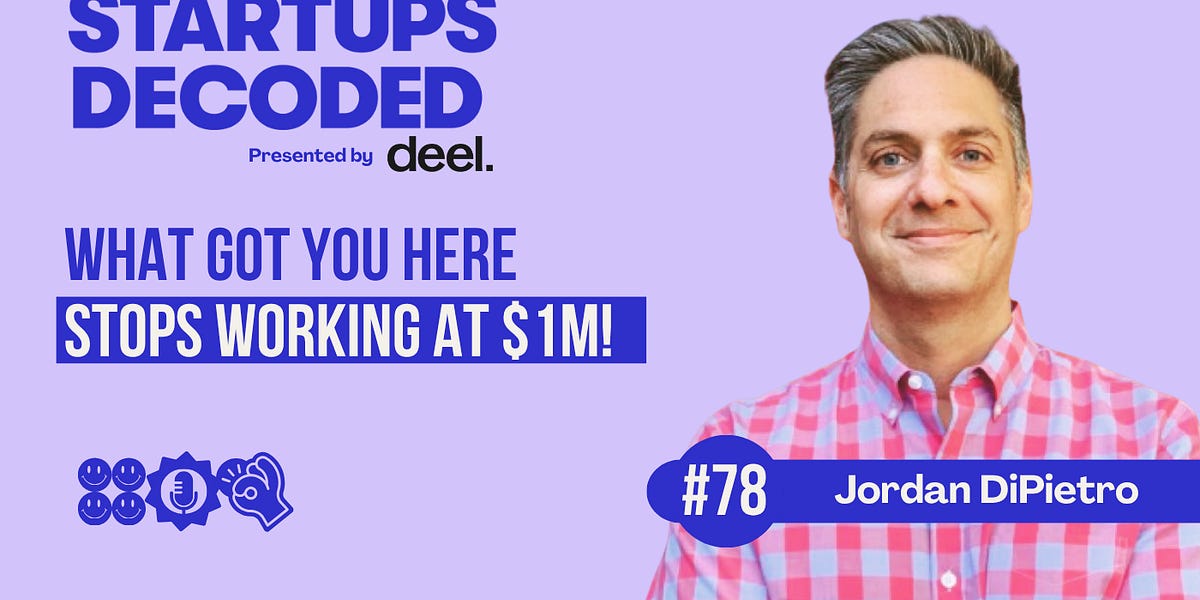
What Actually Breaks Between $1M and $50M
Scaling to $50M in revenue (and beyond), you see a lot of similar patterns. I jumped on Andy Walsh’s podcast a few months ago to discuss what I’ve learned during that sprint. Check it out below.

| A FEW JAWNS TO CHECK OUT |
🔗
|
🤖 New tools // Opus 5 Closes the Gap
Unless you're living under a rock, you saw Anthropic ship Opus 5 last week. Two numbers stood out to me. On ARC-AGI 3, which tests novel problem-solving rather than pattern matching, it scored three times higher than the next best model. And it's priced identically to the model it replaced, so the whole jump lands for free if you were already paying. The chart below is worth a look if you want to see how it stacks up against everything else.

🌡️ Temp check // Team Burnout & AI
Philly founder and entrepreneur Wil tweeted this out, and it's worth your time. Lenny and Noam Segal ran their second annual survey on how tech workers actually feel, and the read is significant: serious burnout climbed to almost 56 percent in a single year, and more than half now wouldn't recommend their own field to someone starting out. Not surprisingly, a lot of it reflects how you feel about (and use) AI. If you lead a team right now, this is an important picture for you to understand.
📚 Book rec // The Best M&A Case Study Hiding Inside a Disney Memoir
Full disclosure, I'm not a Disney guy. I genuinely do not understand the adults who love it. But Bob Iger's memoir is a great business book. It's a decade of serious M&A, the Eisner succession fight, and his friendship with Steve Jobs, all told by the guy who was in the room. If you love business books, this one’s a no-brainer.
Go ask yourself those four questions about your own business this week.
It takes ten minutes and it'll tell you more than your dashboard will.
If the answers make you uncomfortable, hit reply and tell me. I read every one.
Have a great weekend, and thanks for reading.
Jordan
P.S. Wanna work on something? Got a pod or content idea? → Email me | Need 30–60 min of advice? → Book here | Want a coach in your corner? → More info